 Skip to content

Power Inverter for Hospital - Stay Powered, Stay Prepared
JOEYOUNG Inverters are designed for hospital, providing stable and continuous pure sine wave especially for medical appliances. With 17 years of inverter manufacture experience, JOEYOUNG is capable for taking all kinds of inverter orders. Based on your demand, JOEYOUNG also offers customization services for manufacturing your ideal inverters.

JOEYOUNG's Advanced Power Inverter Tailored for Hospital Applications
JOEYOUNG’s advanced power inverter is specifically designed to meet hospitals’ critical power needs.
With reliable features such as seamless switching, precise voltage regulation, and robust protection against overloads, this inverter designed to match with hospital’s battery bank or a photovoltaic system.
JOEYOUNG’s inverter is the perfect solution for maintaining operational efficiency and ensuring patient safety in healthcare environments.

Uninterrupted Power Supply
Ensure seamless operation with an uninterrupted power supply that keeps your devices running without disruption.
Pure Sine Waveform Output
Generates a pure sine wave that mimics grid power, ensuring optimal compatibility with delicate electronic equipment.
Reliable Protection Features
Equipped with several features such as overload protection, over-temperature protection, short circuit protection, etc.
High-Quality Output
Designed with low THD, JOEYOUNG inverters are delivering stable and high-quality electrical power.
Wide Power Capacities
JOEYOUNG presents a variety of power capacities on its inverters, This allows users to choose the capacity according to their needs.
Support Renewable Energy Integration
Enables easy connection to solar or wind power systems, contributing to a greener and more energy-efficient future.
How Power Inverter for Hospitals Works?
The inverter converts the DC Power from the bank of batteries which are charged by the main power grid, a backup generator, or renewable energy sources like solar panels to AC at the required voltage and frequency, such as 230V, 50Hz or 110V, 60Hz.
The conversion must produce a pure sine wave output. This is essential because most medical equipment is susceptible to the quality of the electricity and requires a smooth and stable waveform.

The Brief Introduction of JOEYOUNG's Powerful Inverters
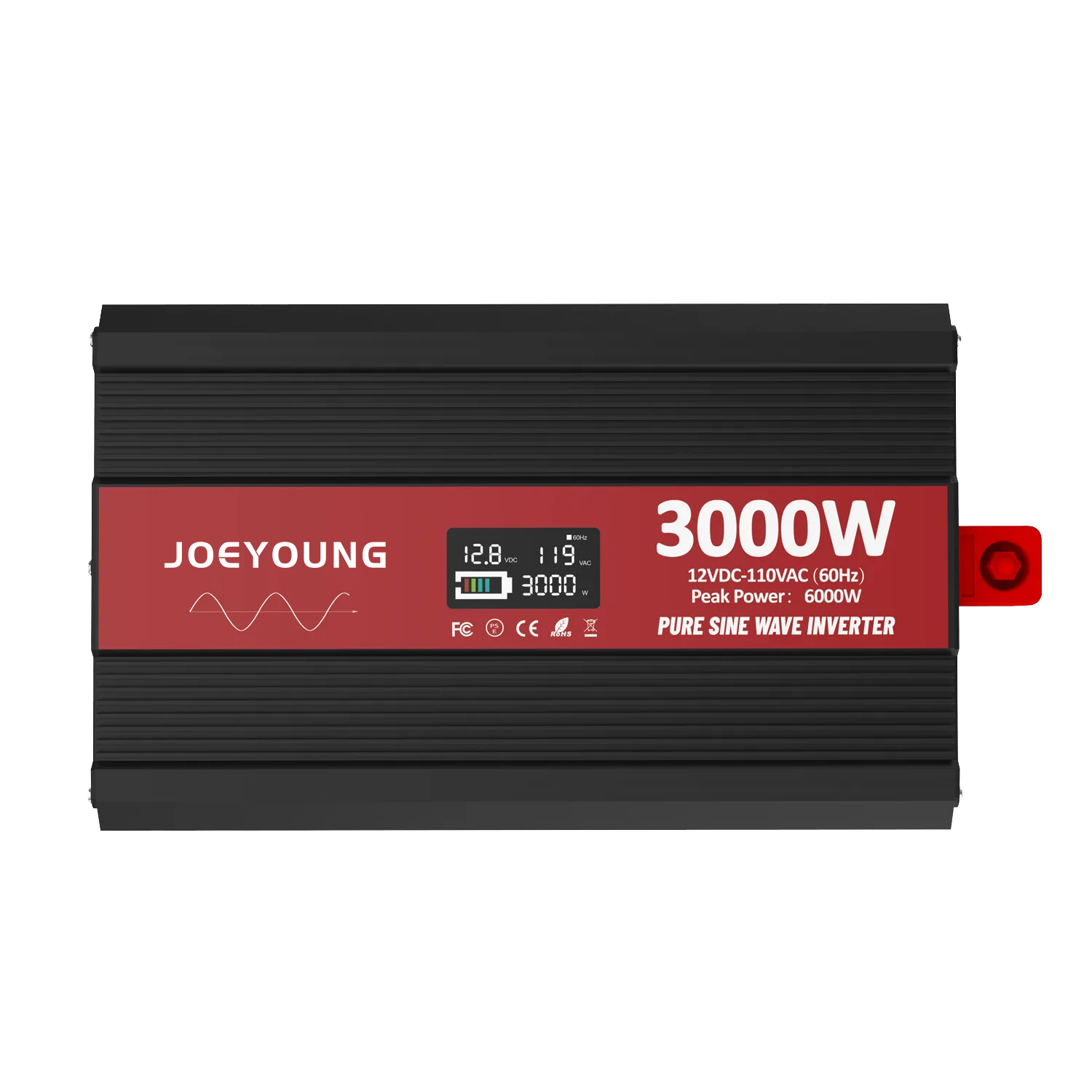
12V 3000-Watt Pure Sine Wave Inverter for Powering High Precision Medical Equipment in Hospital
- Efficiency up to 94% and a peak surge of 6000W
- Pure sine wave technology provides high-quality AC power
- Cleaner, smoother and more reliable power for sensitive equipment
- Top raw materials with advanced technology ensuring the operation safety
- Customized versions especially for US, Europe and Middle-East use

12V 2000W Pure Sine Wave Inverter for Backup Power in Small Clinics or Medical Units
JOEYOUNG specializes in manufacturing 2000W inverters for medium to high power applications, with a wide range of adaptability. The combination of high power and high performance is suitable for medical users and first-aids with limited budgets, high efficiency reach 90% which saves more energy from low no-load losses and more devices can be used at the same time.
- The efficiency can reach up to 94%, with a peak surge of 4000 W
- CE, ROHS, and FCC certified to ensure safety and quality
- Multi-functional for its sockets can provide all precision electronics
- Built-in cooling system avoid the overt heat
- Thyristor soft start technology improve the quality power
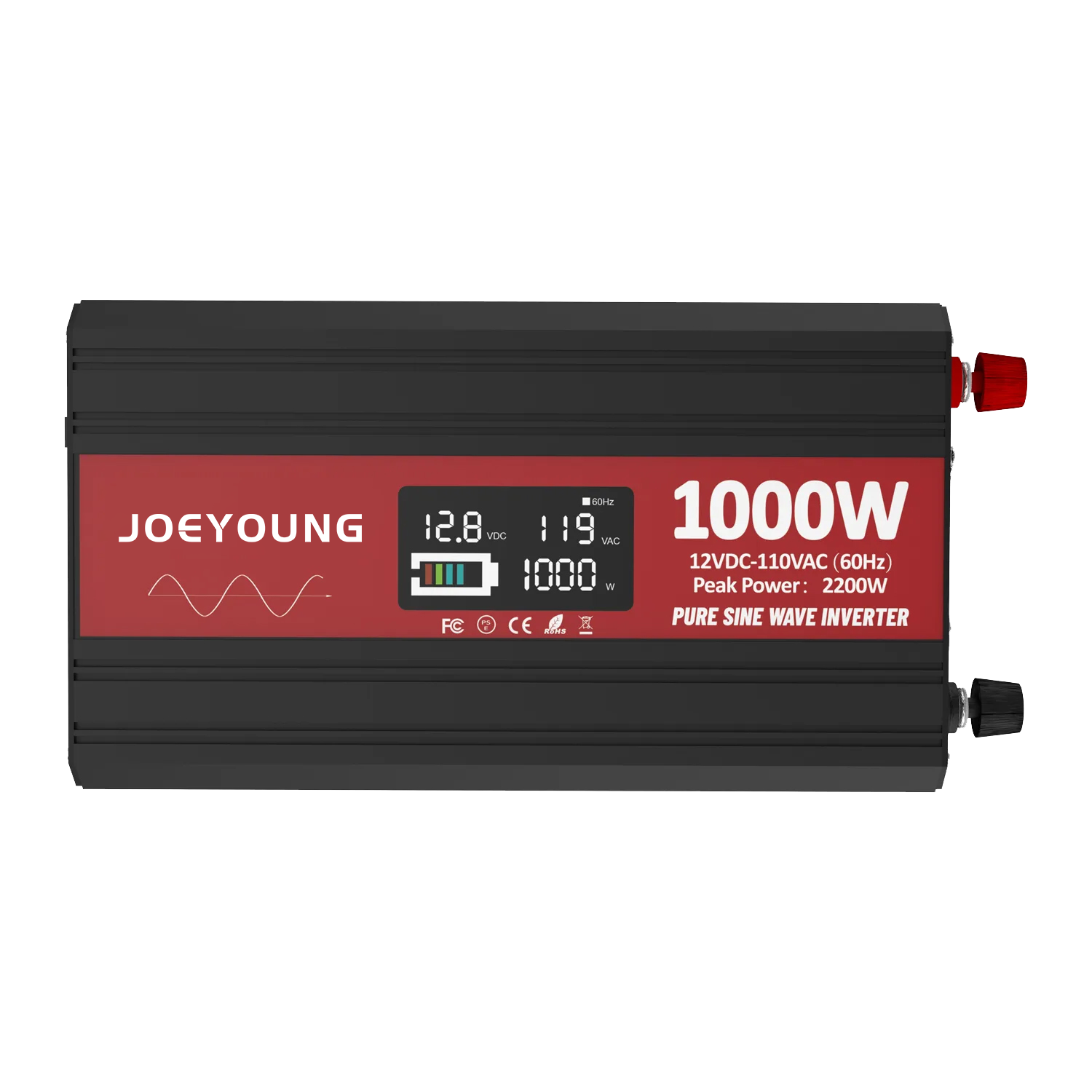
12V 1000-Watt Pure Sine Wave Inverter - Ideal for Powering Small Medical Equipment in Medical Centers
JOEYOUNG 1000W pure sine wave inverters have LCD display and a clear screen for showing its working condition. Well-performed products for the high quality and the advanced technology used in them.
- Pure sine wave technology provides high-quality AC power
- A user-friendly set with built-in AC sockets, USB ports and type-C port
- CE, ROHS, and FCC certified to ensure safety and quality
- Versions can be customized for different countries US or European use
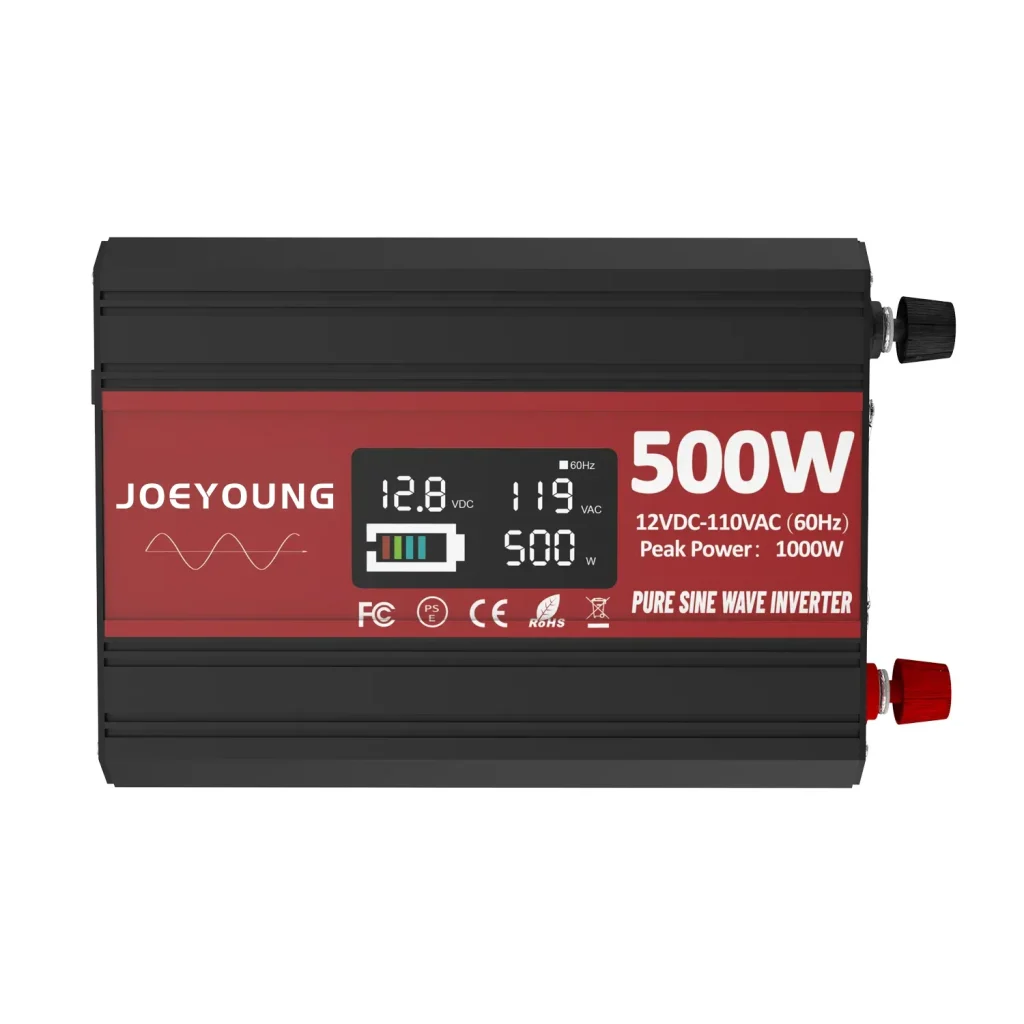
12V 500W Pure Sine Wave Inverter for Laptop and Computer Power Supply in City Hospital
High efficiency conversion and the converting rate reaches 90% and our pure sine wave inverters are compatible with a wide range of small loads operating without barrier. Joeyoung the 12v pure sine wave inverter supplier is ready to make your life convenient and greener.
- Pure sine wave output converting stable electricity
- Capable for the laptop and small appliance
- Cost effective for the low-budget customers
- Easy to carry for the compact size and lightweight great for outdoor use
- Multiple protection systems avoiding overload overheat and waterproof
Why Choose JOEYOUNG Pure Sine Wave Inverter for Hospitals?
Sensitive Electronic Devices
Reliable Safety Features
Automatic Cooling
Basic Application Power Inverter for Hospital

Ensure Uninterrupted Power Supply
Inverters help maintain the power supply to IT systems, preventing data loss or corruption during outage.

Remote Clinics & Field Hospital
Provides reliable power in areas with limited or no access to grid electricity for remote clinics and field hospitals.

Enhancing Emergency Preparedness
In case of natural disasters or large-scale power grid failures, inverters ensure hospital operations continue without delay.

With Renewable Energy Sources
Hospitals integrated with solar energy systems will reduce costs while increasing efficiency and reducing dependency on fossil fuels.

Portable & Emergent Medical Equipment
A Pure Sine Wave output allow medical devices to be portable. For example, power the medical equipment in the ambulance.

Power Critical Medical Equipment
Life support systems, such as ventilators, oxygen concentrators, CPAP machines, infusion pumps, and dialysis machines, can be powered by an inverter that meets medical standards.
Backup Power Integration
Power inverters can work as a key component in a hospital backup power system. They provide immediate power until the main backup generator starts running, filling any gap during a power failure.


Integration with Renewable Energy Sources
Hospitals integrated with solar energy systems will reduce costs while increasing efficiency and reducing dependency on fossil fuels.
Electrical Estimation for Hospital Use
| Device | Power Consumption (Watt) |
|---|---|
| Ventilators | 200-500 W |
| Infusion Pumps | 50-100 W |
| Defibrillators | 100-300 W |
| oxygen Concentrators | 300-600 W |
| Dialysis Machines | 1500-2000 W |
| Patient Monitors | 50-150 W |
| Surgical Lights | 200-300 W (per unit) |
| Anesthesia Machines | 400-800 W |
| Operating Room Tables | 100-800 W |
| Refrigeration Units | 200-800 W |
| Network Routers and Switches | 50-200 W |

Having an electrical estimate for planning an electrical system with renewable technology for hospitals is crucial.
By making lists, we can prioritize devices and ensure compatibility with sensitive medical devices.
Here is the list of several hospital appliances that can be powered by inverter:
How to Choose Power Inverters for Hospitals?
01
Determine Power Requirement
Before choosing the inverter for the hospital, consider the power requirement because the best power inverter for medical support meets the specific demands of the hospital’s facilities and critical equipment.
02
Prioritize the Pure Sine Output Waveform
Prioritize a pure sine wave inverter to ensure compatibility with sensitive medical devices, such as ventilators, monitors, and diagnostic tools. Avoid modified sine waves.
03
Look for Medical-Grade Certification
Ensure the inverter has the medical-Grade Certifications such as IEC 60601-1, UL 60601-1, and FDA approval if applicable.
04
Consider Redundancy and Scalability
Hospital and healthcare facilities’ demands evolve and require redundancy facilities. Look for inverters that support parallel setups to ensure a continuous power supply.
05
Efficiency and Power Factor
Choose an inverter with high efficiency above 90% to reduce energy loss and maximize the use of available power. Then, ensure the inventor has a high power factor to provide stable and reliable power.
06
Safety Features
Choose an inverter with reliable safety features, such as overload protection, short circuit protection, and surge protection, to protect medical devices from voltage spikes and ensuring the system is safe
07
Environmental Considerations
Ensure the inverter is rated to work in the hospital environment, which may have varying temperature and humidity levels and quiet.
08
Brand Reputation and Customer Support
Look for inverters from reputable brands with track record of providing reliable power solutions for healthcare facilities and ensure that the inverter comes with solid warranty and reliable customer support in case of issues or maintenance needs.
09
Cost and Benefit
Medical-grade inverters are generally more expensive than regular inverters due to their high-quality components and certifications.
While the upfront cost may be higher, a reliable inverter reduces the risk of system failure, avoiding downtime and potential loss of equipment or patient care.
Frequently Asked Questions
Yes, an inverter for hospitals is specifically designed to power critical equipment during power outages or grid instability. These devices are essential for maintaining patient care and ensuring smooth hospital operations with reliable power.
Depending on its usage and operational needs, an inverter for hospitals can be highly cost-effective. While the upfront cost of purchasing and installing a hospital-grade inverter may seem significant, the long-term benefits often outweigh the initial investment.
Yes, it is safe to use an inverter that meets the healthcare standard for an oxygen concentrator in a hospital if it is correctly sized and is the appropriate type of pure sine wave inverter. Oxygen concentrators are critical medical devices that require a stable and reliable power supply to operate, and inverters can provide this under the right conditions.
JOEYOUNG provide the best solution regarding renewable technology for hospital, clinic or portable medical appliances use. Pure Sine Wave Inverter is the best choice for medical equipments power supply.
If you want to consult JOEYOUNG’s experts, you can contact us by clicking the button below. We will provide the best solution based on your needs.
What Our Customer Say
Related Article Resources From JOEYOUNG Inverter Supplier

Are Solar Panels Bad for the Environment? The Real Impact Explained

How Does Converter Work in Solar Inverter Systems?
