
Last Updated on May 28, 2025 by June
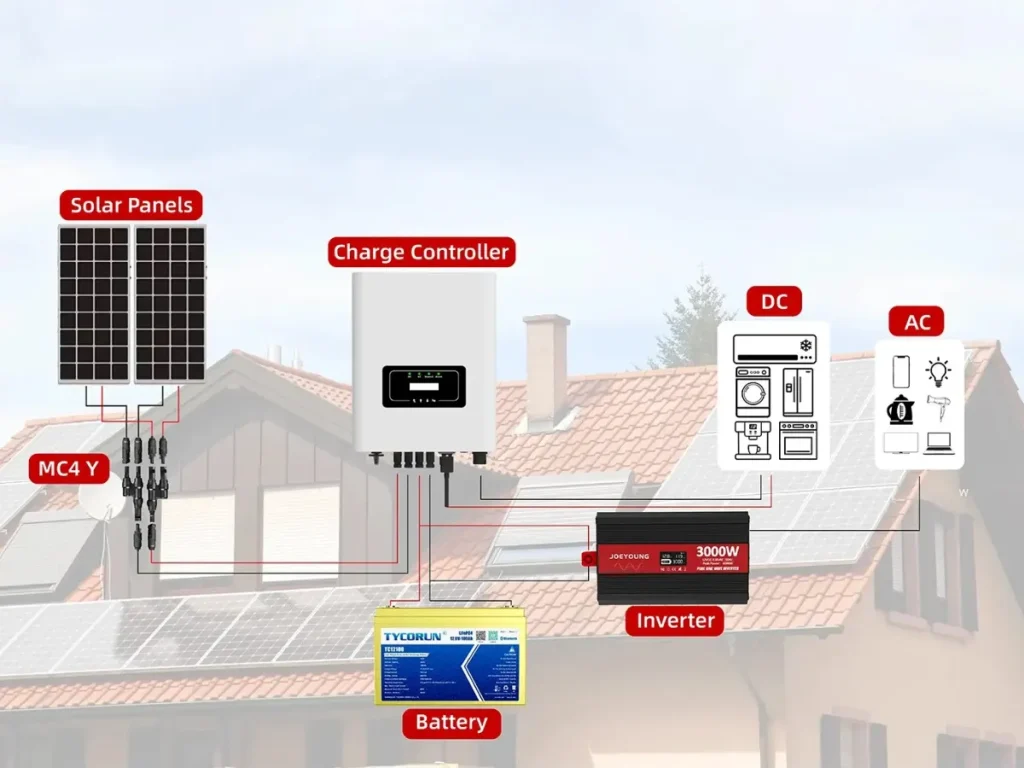
Solar panels are the go-to solution for clean energy in the era of global energy transition. However, solar panels alone are not enough; a conversion device is needed to convert DC (Direct Current) energy into AC (Alternating Current) so that household appliances can use it through an inverter.
This article will guide you through how to connect a solar panel to an inverter and other technical aspects you need to know.
What is an Inverter
Before connecting solar panels to an inverter, it is crucial to understand the inverter application first. An inverter is an electronic device that converts direct current (DC) electricity generated by solar panels into alternating current (AC) that your home electrical appliances can use.
There are various types of inverter types on the market today, such as off-grid, on-grid, and hybrid inverters, each with different functions and inverter specifications. Knowing the suitable inverter type is crucial before installation.
How to Connect a Solar Panel to an Inverter: Tools and Materials
Before starting the process of connecting a solar panel to an inverter installation, here are some of the main components you should prepare:
- Solar Panel
- Joeyoung Inverter Product
- Battery (if using off-grid or hybrid system)
- Charge controller (to manage battery charging)
- Inverter cables
- DC isolator switch
- MC4 connectors
- Multimeter
- Screwdrivers and basic electrical tools
In addition, for a safe and efficient installation, you must understand inverter input and output. The solar panels generate DC, which enters the inverter’s input section. The inverter’s output is AC electricity, which is used for home appliances.
Usually, the input is on the back side of the inverter with + and – polarity, while the output is on the side that goes to the breaker panel or home electrical system.
Notice the Inverter Voltage and Inverter Current
Before connecting anything, match the solar panel specifications with the inverter voltage and inverter current. For example, if the inverter has a maximum input voltage of 24V, do not use more than two 12V panels in series.
Also, check the maximum current (amperage) the inverter can handle to avoid overcurrent. A mismatch in these specifications can lead to inverter failure and pose a fire risk.
How to Connect a Solar Panel to an Inverter: Step-by-Step Procedure
Preparation and Safety
Turn off all devices before starting the installation. Wear protective gloves and goggles. If necessary, use a multimeter to check the panel voltage before connection. Use personal protective equipment such as insulating gloves and safety glasses.
Check Solar Panel and Inverter Specifications
Ensure the voltage, output, and input between the inverter and the solar panel match. Solar panels should not have an output voltage that exceeds the inverter’s input capacity.
Attach the Cable from the Solar Panel to the Charge Controller
Make sure to connect the positive (+) wire from the solar panel to the positive terminal of the charge controller, and vice versa with the negative (-) wire. MC4 connectors are used to secure and weatherproof connections. But, if you choose Joeyoung Off-Grid and Hybrid Inverter Charger, you can use just one device to charge the battery and convert energy. Refer to the inverter vs inverter charger for more detailed information.
Connect the Charge Controller to the Battery
If your system uses batteries (off-grid or hybrid), connect the output terminal of the charge controller to the battery. Ensure the positive and negative polarity is correct to avoid damaging the battery.
Connect the Battery to the Inverter Input
Use appropriate cables to connect the battery to the inverter input, ensuring the connection is firm and the polarity is correct. If the inverter is batteryless (on-grid), the input cable can be directly from the charge controller or solar panel, according to the inverter type.
Connect the Inverter Output to a Load or Home Electrical Panel
Connect the AC output of the inverter to the breaker of the house panel or directly to the electrical appliances you want to use. It is recommended that an MCB be used for circuit protection.
Turn on the System Gradually
If you use an inverter separate from the charger, turn on the inverter first, then turn on the charge controller, and make sure the solar panels are generating current. Always check the indicators on the inverter and charge controller and make sure there are no errors. And the power is ready to be used and stored.
How to use an inverter safely?
After the installation process and connecting the solar system, it is equally important to learn how to use an inverter correctly.
You can find some tips below:
- Turn on the inverter only when the system is connected correctly.
- Do not connect loads exceeding the inverter capacity.
- Conduct periodic monitoring on the monitor and ensure that all wiring and ventilation are in top condition monthly.
- High-quality inverters like Joeyoung Inverter Products are equipped with an advanced cooling system. Physically, it can be seen in the inverter cooling fan, which is highly reliable.
When to Call a Technician?
Once you’ve done the installation process safely and correctly, there may be things you don’t understand, especially if you’re new to inverter use. Some of the following may be indicators that you need to contact a professional technician.
- The inverter does not turn on even if the connection is correct.
- There is a continuous buzzing sound. Although inverter noise is normal, when the sound is ear-splitting, it can indicate damaged or improperly functioning components inside.
- The power output is unstable.
- The error indicator flickers.
Inverters are sensitive electronic devices, and mishandling the foam damages the system as a whole.
Conclusion
Connecting solar panels to an inverter is not impossible, even for beginners. By understanding how to do so and paying attention to aspects such as inverter voltage, input and output, cables, and specifications, you can build an efficient and safe self-energy system.
Choose a high-quality inverter, install it correctly, and understand how to use it so that your system lasts longer and works optimally. That way, you not only save on your electricity bill but also contribute to a greener environment.
Frequently asked questions
Yes, in most cases, you can connect a solar panel directly to an inverter, but it depends on the type of inverter you have. Using an on-grid inverter, you can connect the panel directly to the inverter without needing a battery. However, with an off-grid inverter, it's recommended to use a charge controller to regulate the power going to the battery before sending it to the inverter.
Yes, you can connect multiple solar panels to one inverter, but it’s important to match the panels' voltage and current ratings with the inverter’s specifications. Typically, solar panels are connected in series to increase the voltage or in parallel to increase the current. Ensure the combined output does not exceed the inverter’s input voltage or current limits.
To ensure compatibility, check the inverter specification carefully. Verify the inverter's voltage and current limits, and compare them with your solar panel's output. The inverter should be able to handle the voltage and current generated by your solar panels without overloading. If you're unsure, it’s best to consult the inverter's manual or contact a professional for advice.
If the inverter voltage exceeds the output voltage of the solar panel, the inverter will not function correctly and may not turn on. Overvoltage can also damage the inverter’s internal components. Always match the panel’s output voltage with the inverter's input specifications to ensure proper functioning.

Solar panels are a low-emission energy technology with lower lifecycle environmental impact than fossil fuel energy systems. Solar panel systems reduce emissions during operation, and recycling systems and efficient components minimize environmental impact across manufacturing and end-of-life stages.

A converter works by regulating and optimizing DC power from solar panels, ensuring stable voltage and maximum energy output. It plays a key role in improving efficiency, supporting MPPT, and maintaining reliable performance in solar inverter systems.

Solar panel recycling costs typically range from $15–$45 per panel and depend on local facilities and regulations such as the WEEE Directive. Finding certified recycling centers near you is essential to ensure proper disposal and material recovery.
Authors
-
View all postsPassionate to education and renewables energy make me enthusiast about making complex technologies accessible to everyone by translating it into a practical and easy to understand. Let's learn and grow together!
-
View all postshi I am Jim, an inverter specialist with over 10 years of experience. I previously worked as an R&D engineer at a leading energy company, focusing on inverter design, optimization, and system integration. I have been involved in the development of key technologies and gained comprehensive expertise in both technical innovation and practical applications.
Currently, I focus on professional writing to provide clear analysis and practical insights into inverter technology, contributing to its advancement and broader adoption in the industry.
